


Heat Safety: Heat Index & WBGT
4.747.00 Reviews
App Specs
- Version
- 3.3.1
- Updated On
- License
- Free
- Downloads
- 10,000+
- Developer
- Qvyshift LLC
- Categories
- Weather
- Platform
- Android
Screenshots
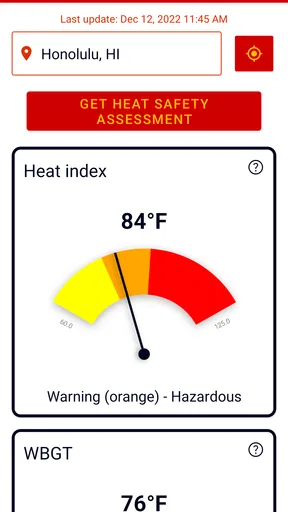
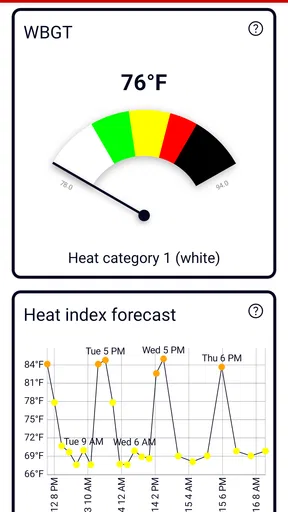
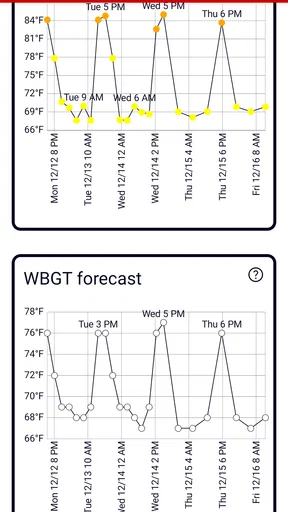
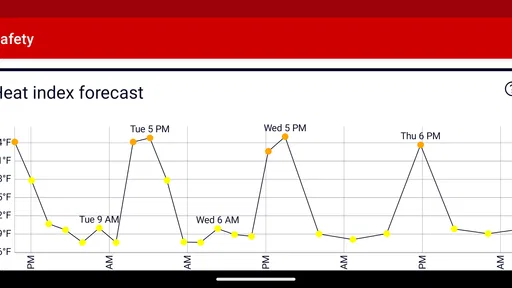
 Analysis by AppCompare
Working outdoors in hot weather is not just a matter of checking whether the sky is clear. I have found that the uncomfortable part of heat is often the combination of air temperature, humidity, sun exposure, clothing, and physical effort. Heat Safety: Heat Index & WBGT is built for that more practical question: how risky might the conditions feel for someone who has to keep moving outside?
After spending time with it, I see this free weather app from Qvyshift LLC as a focused tool rather than a complete replacement for a large everyday weather service. Its purpose is narrower and more useful when the main concern is outdoor work safety. It brings heat index, wet bulb temperature, and forecasts into the same conversation, which makes it more relevant to a grounds crew, construction worker, coach, event organizer, or anyone planning strenuous activity in warm conditions.
The app has a 4.7 average from over 300 ratings and more than 40 written reviews, with over 10 thousand installs. Those figures suggest a small but clearly interested audience. I would not treat that as proof that it fits every workplace, but it does indicate that the app has found a practical niche. The age rating is Everyone, and the app is free to start, although optional purchases range from $0.99 to $5.99 per item.
How Heat Safety fits into a real hot-weather routine
I use Heat Safety as a prompt to make heat checks part of the day’s plan, not as a last-minute verdict on whether it is safe to go outside. A quick look before leaving can help me decide when to tackle strenuous tasks and what to revisit as conditions change. That routine works best when I pair the forecast with local exposure and a clear plan for breaks, shade, and water.
A safety-focused view instead of a general forecast
Most weather apps are designed to answer familiar questions: Will it rain? What will the temperature be this afternoon? Should I take a jacket? Heat Safety approaches the forecast from a different angle. I would open it when the temperature alone feels misleading and I need a better sense of the strain that outdoor conditions may place on the body.
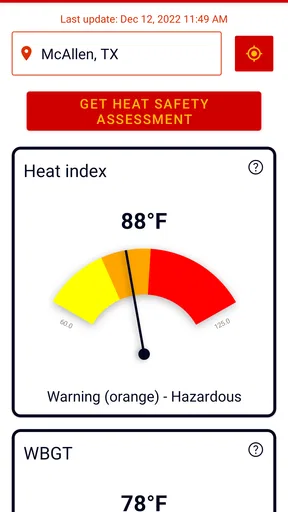
That distinction matters because a warm day with heavy humidity can feel much harder than a dry day at the same temperature. A standard forecast may show a single temperature and a general “feels like” value, while this app puts heat-related indicators at the center. The heat index is easy to understand for many people, but the wet bulb temperature adds another layer for users who need to think about the body’s ability to cool itself.
I especially like that the app is not trying to turn a safety decision into a simple yes-or-no answer. A number can help me notice a problem earlier, but it cannot account for a worker’s health, acclimatization, clothing, hydration, workload, shade, breaks, or access to cooling. I would use the readings as part of a plan, not as permission to ignore discomfort.
Worth Reading Before You Choose

Flipboard Shows What News Apps Must Do Beyond the Feed

Switching to Android Auto Means Rethinking Your Driving Routine

Google Calendar Makes a Crowded Week Easier to Manage

Ludo King Makes the Most of the Minutes Between Plans

Baby Panda World Brings Quick Play to Modern Phones, but Its Game Library Feels Busy

ESPN’s Live Game View Makes Following Close Games Easier
Who will get the most value
This is a strong fit for people who spend scheduled periods outside rather than checking the weather casually. A landscaping supervisor could use it before assigning heavy tasks. A youth sports coach could look at the forecast before deciding whether practice needs shorter drills and more breaks. Someone preparing for a long hike or outdoor event could compare the expected heat with the timing of the activity and choose a safer part of the day.
The focused design also suits users who already understand that “temperature” is only one part of heat stress. If you have ever postponed work because the air felt oppressive even though the thermometer did not look extreme, the app’s approach makes sense. It gives that concern more structure and encourages planning around conditions rather than reacting after people are already overheated.
On the other hand, I would not choose it as my only weather app for travel, commuting, storm alerts, radar, or detailed daily planning. Its value comes from the heat-safety angle. If your main need is a broad weather dashboard with maps, severe-weather notifications, and many layers of general information, a full-featured weather service will likely be more convenient.
A realistic way I would use it
Imagine I am helping prepare an outdoor worksite for an afternoon shift. I would check the forecast before the crew arrives, then look beyond the ordinary temperature at the heat-related readings. If the conditions are expected to worsen later, I could move the most demanding work earlier, plan additional water and rest opportunities, and identify a shaded area before the shift begins.
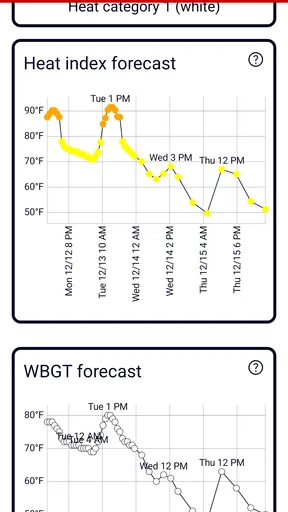
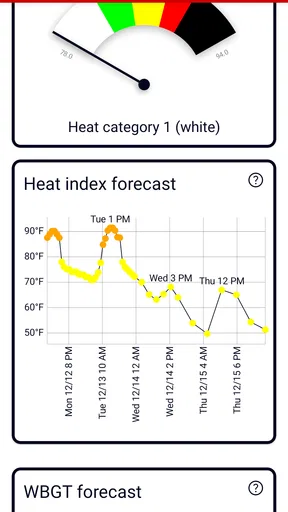
The useful insight here is not simply “the app says it is hot.” The more valuable workflow is comparing the timing of the work with the forecast and treating changing conditions as a planning issue. A morning check is not enough if the hardest task is scheduled for the hottest part of the day. I would check again before the work starts and whenever the weather changes noticeably.
For a coach, the same process could mean changing the structure of practice instead of automatically cancelling it. Technical drills with lower exertion might replace repeated sprints, and players could be given more frequent recovery periods. The app does not make those decisions for me, but it gives me a better reason to ask the right questions before people are already struggling.
Understanding the measurements without overtrusting them
The heat index is familiar to many users because it combines heat and humidity into an estimate of how hot conditions may feel. Wet bulb temperature is less familiar but important in serious heat discussions because it relates to evaporative cooling. When the air is humid, sweat does not evaporate as efficiently, and the body can have a harder time releasing heat.
That makes the wet bulb reading useful as a warning that a simple temperature forecast may understate the challenge. It is also a reason not to compare one indicator with another as though they were interchangeable. They describe different aspects of heat stress, so I would look for a consistent pattern of concern rather than focusing on a single number in isolation.
A practical tip is to record the reading at the time and place where the work will actually happen. A shaded residential street, an open sports field, and a paved worksite can feel very different even when a forecast covers the same general area. The app can inform the plan, but local exposure still matters. Direct sun, reflective surfaces, protective equipment, and heavy clothing may make the real workload harder than a screen suggests.
What the current version means for the experience
The current version is 3.2.4, and the app was released on December 3, 2022. That gives the product a history beyond a brand-new experiment, while the version number shows that it has continued to move forward since its initial release. I see that as encouraging for an app with a specialized purpose: the developer has had time to refine the product rather than leaving it as a one-off calculator.
Still, a version number by itself does not tell me that every possible workplace need has been solved. I would judge the current release by how easily it supports my routine: opening it before outdoor activity, interpreting the indicators without confusion, and turning the forecast into sensible decisions. The app is most successful when it reduces uncertainty without pretending to replace human judgment.
For existing users, the main benefit of staying with the current release is continuity with a tool designed around heat safety rather than a general forecast. If you already use it before shifts or practices, the best improvement may come from using it more deliberately: check at consistent times, compare the forecast with actual conditions, and keep your response plan separate from the app’s numbers.
Where the app creates useful friction
One limitation is that a focused safety app can require more interpretation than a normal weather app. A general service may give me a familiar color scale or a short sentence that is instantly understandable. Here, I need to know what heat index and wet bulb temperature are telling me and how they relate to the people and work in front of me.
I do not consider that a flaw for the intended audience, but it can be a barrier for someone who wants a single effortless answer. Before relying on the app for a team, I would make sure everyone involved understands the indicators and agrees on what actions follow from concerning conditions. A reading is only useful if the group has a plan for breaks, water, shade, schedule changes, or stopping work.
Another trade-off is the difference between a forecast and a measurement taken directly at the worksite. Forecast information is valuable for planning, but conditions can vary across a short distance, especially around pavement, buildings, shade, and wind. I would avoid presenting the app’s output as a precise personal exposure assessment. It is better used as an early warning and scheduling aid.
Free access and optional purchases
The app is free, which makes it easy to try before deciding whether it belongs in a regular safety routine. That is important for individuals, volunteer groups, and small teams that may not want to commit money before understanding whether a specialized weather tool helps them.
There are in-app purchases priced from $0.99 to $5.99 per item. I would approach those purchases carefully and first establish what I can accomplish with the free experience. For a personal user who only checks heat conditions occasionally, paying may not be necessary. For someone who uses the app repeatedly during a hot season, an optional purchase could be easier to justify if it removes a genuine limitation in their workflow.
Because the app’s central value is decision support, I would not buy anything simply to obtain more information without knowing how that information will change my actions. The right question is whether a purchase makes routine checks faster or more useful, not whether having additional app content automatically makes a worksite safer.
Device support and everyday practicality
The app requires Android 8.0 or later, so people with older devices should check compatibility before planning around it. On a supported phone, the most practical setup is to make the check part of an existing routine: before leaving home, before a shift begins, or before an outdoor session changes from light activity to strenuous work.
I would also keep the phone accessible without letting it become the only source of communication. A supervisor may need to share the plan with a group, and a coach may need to explain changes to athletes and parents. The app is useful on the individual screen, but the safety benefit grows when its warning signs become part of a clear group routine.
How it compares with ordinary weather apps
The usual weather app wins for breadth. It is generally better when I need rain timing, hourly conditions for many activities, travel planning, or a quick look at several locations. It may also be the app I open most often because it covers more everyday situations in one place.
Heat Safety wins through focus. Instead of making heat-related information one small card among many, it puts the indicators that matter for outdoor exertion at the front of the decision. That makes it easier to think about heat as a work hazard rather than just an uncomfortable forecast detail.
I would happily use both types together. A general weather service can help me understand the broader day, while Heat Safety can prompt a more careful review of heat exposure. The trade-off is that maintaining two apps takes an extra step, but that step is worthwhile when the activity involves prolonged exertion, protective clothing, direct sun, or people who may be especially vulnerable to heat.
Questions I would answer before recommending it
If you are wondering whether it is suitable for children or family use, the age rating is Everyone, so it is broadly accessible. That does not mean every child should make independent safety decisions from an app. An adult should still translate the information into sensible limits, supervision, hydration, rest, and activity changes.
If you are asking whether it replaces workplace safety guidance, my answer is no. I would use it to support a workplace plan, not to replace training, local procedures, medical advice, or a supervisor’s responsibility. The app can highlight environmental risk, while the organization still needs to decide how to respond.
If you are unsure whether it is useful for occasional recreation, it can be. A hiker, runner, gardener, or outdoor volunteer may benefit from checking conditions before committing to a demanding activity. The more intense and prolonged the activity, the more valuable the heat-focused view becomes. For a brief walk to a nearby shop, a full safety check may feel unnecessary.
If you are deciding whether to pay for optional items, I would first use the free version during the situations that matter most to you. Keep notes on whether the app changes your timing, clothing, breaks, or route. If it does not affect your decisions, additional spending is unlikely to solve the real problem.
What I would like to see watched over time
For future use, I would pay attention to how Qvyshift LLC continues to refine the relationship between the readings and practical action. The strongest direction would be clearer guidance around interpreting heat indicators without reducing them to an oversimplified traffic-light answer. Users need context, especially when conditions vary by activity and exposure.
I would also watch whether the app remains quick enough for repeated checks. A safety tool should fit naturally into a busy morning, not require a long setup every time. Consistency matters more than decorative extras: if I can check the relevant forecast, understand the trend, and communicate a plan quickly, the app earns its place.
My final view is that Heat Safety: Heat Index & WBGT is a worthwhile specialist app for people who regularly work, train, or spend long periods outdoors in hot conditions. Its real strength is turning heat from a vague feeling into a planning conversation. It is not a universal weather replacement, and it cannot judge personal health or make workplace decisions, but it gives the right users a more relevant starting point than a basic temperature forecast.
I would recommend trying it if heat exposure is part of your routine, especially if you are responsible for adjusting schedules or protecting a group. I would skip it if you only want general weather information or expect one number to make safety decisions for you. Used with common sense and a clear response plan, this free weather app offers a focused way to notice dangerous heat earlier and prepare before the hardest part of the day arrives.
Pros
- Combines heat index and WBGT readings for broader heat-risk awareness.
- Uses location data to provide conditions relevant to your current area.
- Clear risk levels make readings easy to understand at a glance.
- Useful for outdoor workers
- athletes
- hikers
- and event organizers.
- Can support better planning for breaks
- hydration
- and strenuous activity.
Cons
- Accuracy depends on reliable weather data and properly enabled location services.
- WBGT estimates may not reflect shade
- wind
- clothing
- or individual conditions.
- Some features or detailed forecasts may require an internet connection.
- Risk guidance cannot replace medical advice or official emergency warnings.
- Frequent notifications or location access may affect battery usage.
FAQs for Heat Safety: Heat Index & WBGT
What is Heat Safety: Heat Index & WBGT used for?
Heat Safety: Heat Index & WBGT is designed to help you understand how hot outdoor conditions may feel and how much heat stress they can create. It combines weather information with heat-related measurements such as the Heat Index and Wet Bulb Globe Temperature (WBGT), making it useful for outdoor workers, athletes, hikers, travelers, and anyone planning activities in hot weather. It should support decisions, not replace official safety guidance.
What is the difference between Heat Index and WBGT in the app?
The Heat Index estimates how hot the air feels by combining temperature and humidity, mainly for shaded conditions. WBGT is a broader heat-stress indicator that can account for humidity, air temperature, radiant heat from the sun, and wind. Because WBGT is more closely related to strenuous activity and outdoor exposure, it can be especially helpful for sports training, work planning, and deciding when rest and hydration breaks are necessary.
Does Heat Safety: Heat Index & WBGT require my location or internet access?
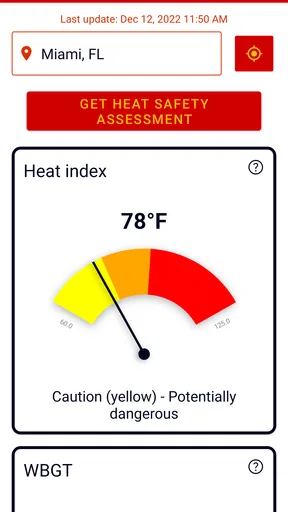
The app may use your device location to provide conditions for your current area, although you can generally select or check another location when planning ahead. Internet access may be needed to retrieve updated weather and environmental data. If the connection is unavailable, information could be delayed, incomplete, or unavailable. Before relying on a reading, confirm that the displayed location and update time are correct.
Can I rely on the app for medical or emergency heat-safety decisions?
No. Heat Safety: Heat Index & WBGT is an informational planning tool and should not be treated as medical advice, an emergency service, or a substitute for official warnings. Heat illness can occur even when an app shows moderate conditions, particularly for children, older adults, pregnant people, and those with health conditions. Stop activity immediately if symptoms appear, move to a cool place, and seek medical help when necessary.
Who can benefit most from using Heat Safety: Heat Index & WBGT?
The app can be useful for people who spend time outdoors, including runners, cyclists, coaches, athletes, construction workers, gardeners, campers, hikers, and event organizers. It helps users compare heat conditions before and during an activity so they can plan hydration, shade, clothing, pacing, and rest periods. However, readings should be considered alongside local weather alerts, workplace policies, and guidance from health or safety authorities.


